
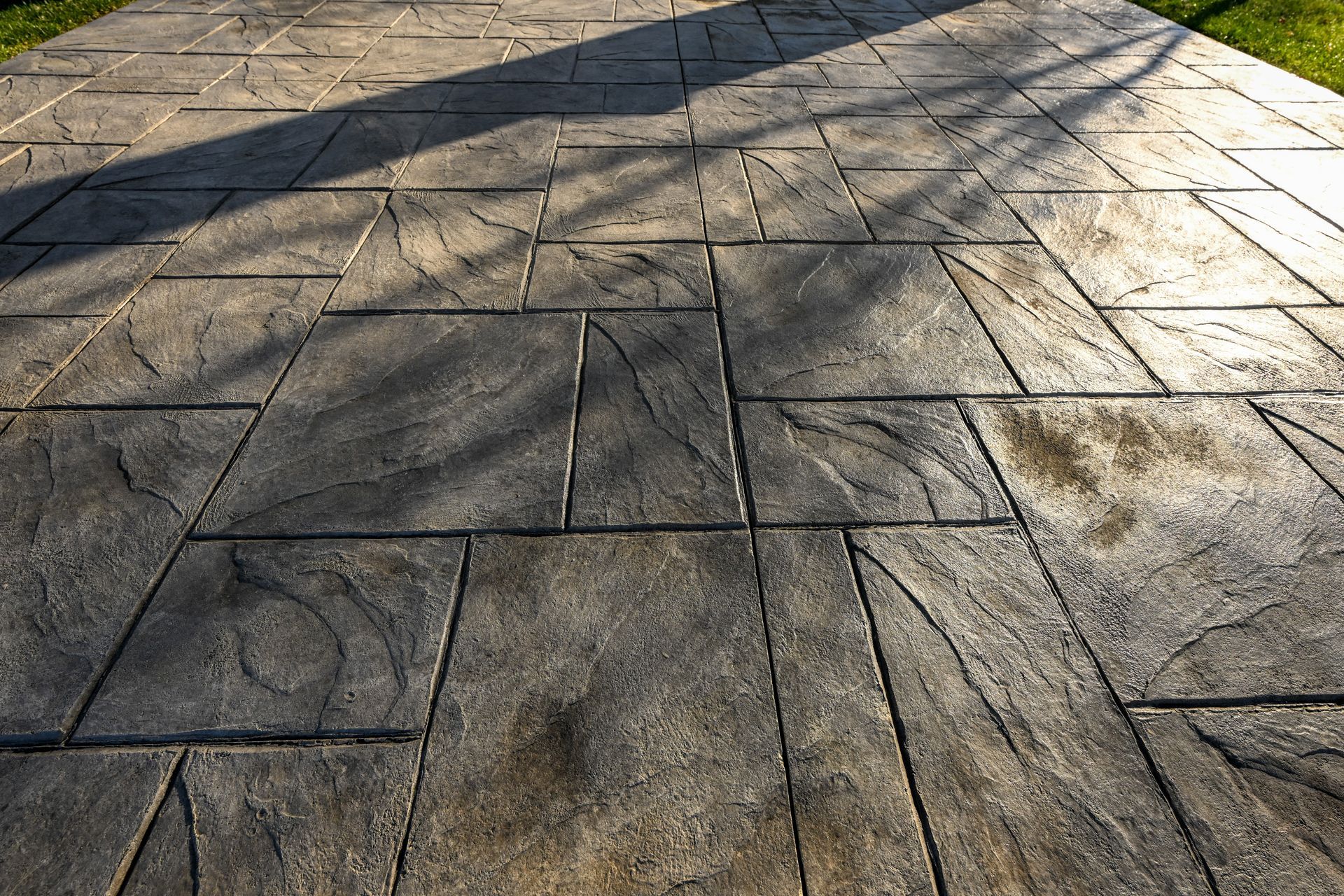
Concrete That Looks Like Natural Stone
Spirit Custom Concrete LLC installs decorative stamped concrete throughout the West Valley City area, creating patios and walkways that replicate stone, brick, or tile without the cost or upkeep.
Your patio or walkway can look like natural flagstone or old-world brick without the settling, weed growth, or shifting that comes with individual pavers. Stamped concrete gives you a seamless surface textured and colored to match almost any material, and it stays level year after year because it is poured as a single slab. You choose the pattern and finish before the pour, and once the concrete sets and the release agent is washed away, the design becomes permanent.
Spirit Custom Concrete LLC offers a range of stamp patterns in West Valley City, Salt Lake City and surrounding areas that replicate cobblestone, slate, wood plank, and classic brick layouts. You select a custom color that complements your home exterior, and the crew applies a sealer after curing to protect the surface from weather, stains, and wear. This process creates a durable outdoor surface that requires occasional resealing instead of constant weeding, releveling, or replacing individual stones. The sealed finish resists oil stains on driveways and helps water bead off instead of soaking in.
If you want a detailed estimate that includes pattern samples and color charts, reach out to discuss your project and see how stamped concrete fits your outdoor space.
How the Pattern and Color Get Applied
The crew pours the concrete over a prepared and compacted base, then uses rigid mats pressed into the surface while the material is still workable. These mats leave behind the texture of stone joints, wood grain, or brick mortar lines, depending on the pattern you selected. A color hardener is often broadcast onto the surface before stamping, and a powdered release agent prevents the mats from sticking while adding accent tones to the recessed areas. Once the stamps are lifted and the concrete cures, the crew washes off the release powder to reveal the full pattern and color contrast.
After the concrete fully cures, you will notice a surface that feels solid underfoot and does not shift when furniture or planters sit on it. The stamped design stays consistent across the entire area, so you do not see uneven gaps or sunken sections like you might with loose pavers. The sealed finish gives the concrete a slight sheen and makes it easier to hose down leaves, dirt, or spills without staining the color.
The sealer needs reapplication every few years depending on traffic and sun exposure, but the stamped pattern itself does not fade or wear away. The crew can also cut control joints in strategic locations to manage any natural cracking, keeping those joints hidden within the stamped lines so they blend into the overall design. This method works for pool decks, front entryways, and even interior floors if you want a decorative concrete surface indoors.
Questions About Patterns and Maintenance
Homeowners often ask about color longevity, pattern variety, and how stamped concrete compares to real stone when planning outdoor projects that need to last.
Spirit Custom Concrete LLC can show you pattern samples, discuss color options, and provide a detailed quote based on your outdoor layout and drainage needs. Contact us to schedule a consultation and see how stamped concrete compares to the cost and maintenance of natural stone or pavers for your project.