
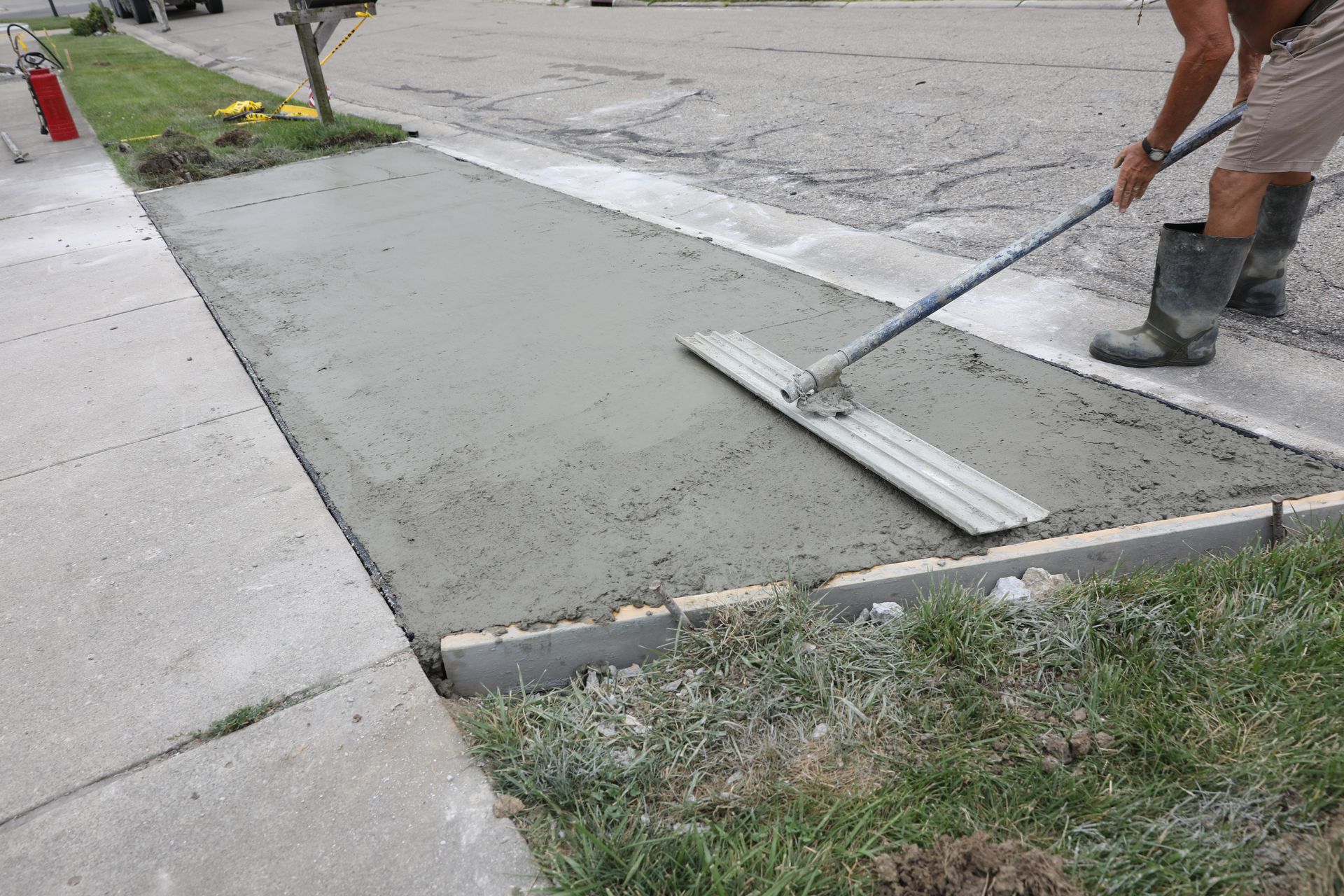
Reinforced Concrete Where Street Meets Driveway
Spirit Custom Concrete LLC pours driveway approach sections that connect your property to the street, built to handle vehicle transitions, traffic loads, and local grading requirements.
The approach is the short concrete section between the street curb and your main driveway, and it takes more abuse than almost any other part of your property. Every time a vehicle enters or exits, weight shifts across this transition zone, and the concrete has to handle that load without cracking or settling. If the approach is cracked, uneven, or crumbling, your car scrapes the low edge, water pools instead of draining, and you risk failing a city inspection if repairs are required for code compliance.
Spirit Custom Concrete LLC removes the damaged approach section, installs a compacted base, and pours new concrete with rebar or wire mesh to reinforce the slab. The crew grades the approach so water flows away from your driveway and toward the street, meeting city drainage standards and preventing runoff from pooling at the curb. The new concrete is finished to match your existing driveway surface and cures into a solid transition that handles daily traffic without shifting or breaking apart.
If your approach has visible cracks or does not meet the street evenly, get in touch to schedule an inspection and discuss replacement options that meet local codes.
How the Approach Gets Built for Traffic Loads
The crew starts by removing the old approach concrete and any unstable base material underneath. A compacted gravel or crushed rock base is installed to provide a stable platform that will not shift under vehicle weight. Rebar or welded wire mesh is placed inside the form before the pour to reinforce the slab and prevent cracking from the constant stress of cars entering and exiting. The concrete is poured to the correct depth and sloped so water drains toward the street instead of back toward your property.
After the pour, you will see a smooth, level transition from the street to your driveway with no sharp drop or lip that scrapes your front bumper. The surface stays even when vehicles roll across it because the reinforced slab does not flex or crack under load. Water flows off the approach during rain instead of pooling at the curb, which reduces ice buildup in winter and keeps mud from washing onto your driveway.
The approach concrete is finished with a broom texture or smooth trowel depending on how your existing driveway looks, so the transition blends visually. Control joints are cut into the slab to manage any natural expansion or contraction, and the crew ensures the approach meets city width and slope requirements before the concrete sets. This work typically requires a permit, and the new approach must pass a municipal inspection to confirm it complies with drainage and accessibility standards.
Common Concerns About Permits and Durability
Homeowners often have questions about city approval, how long the approach lasts, and whether the new concrete will match their existing driveway before committing to a replacement.
Spirit Custom Concrete LLC handles the permit process, prepares the base to city standards, and pours approach concrete that integrates smoothly with your driveway while meeting local drainage and slope requirements. Contact us to inspect your current approach and get a detailed estimate for replacement.